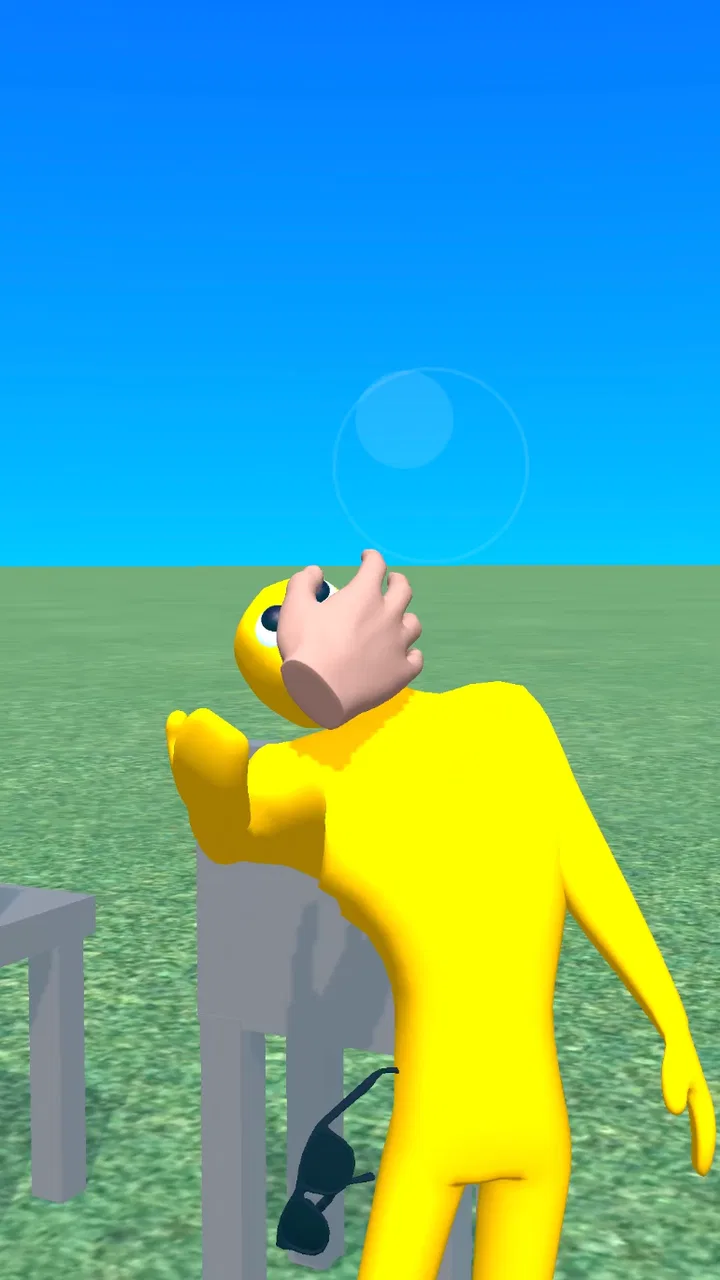
Slap Beat
- 3.8
- Rating
- 1.00M
- Installs
- Free
- Price

 Analysis by App-foxy
I spent time with Slap Beat as a quick arcade game built around one simple idea: react to enemies by slapping or patting them at the right moment. That narrow focus is also its main appeal. I could understand the basic purpose almost immediately, start playing without a long tutorial, and fit a short session into an otherwise busy day. It is the kind of game I would suggest to a friend who wants a light reflex challenge rather than a large adventure or a complicated strategy system.
At the same time, its simplicity means the experience depends heavily on how comfortable you are with fast visual decisions and repeated touch input. This is not a game I would choose for deep progression, story, or a relaxing pace. I found it more useful as a brief attention exercise: open it, play for a while, and stop when the repeated action begins to feel tiring. That makes its accessibility less about a long list of options and more about whether its central gesture suits the player.
How the game communicates its action
The core interaction is easy to describe. Enemies appear, and I respond with a slap or pat. Because the game is in the arcade category, the important information needs to be understood quickly rather than studied. I did not have to learn a large control scheme, remember several character abilities, or move through a complicated menu structure before reaching the main activity. For someone who prefers direct navigation, that is a real strength.
You May Also Like

 Blood Strike: 2.5 Anniversary
Blood Strike’s Loadouts Turn Every Drop Into a Tactical Gamble
A close look at Blood Strike’s custom loadouts: how fast access to signature weapons reshapes its battle royale rhythm, rewards preparation, and narrows the gap between fights.

 Pandora - Music & Podcasts
Pandora’s Music Is Easy to Start, but Harder to Recover
Pandora’s strength is its low-effort path from a seed to a station. Its weak spot is how much confidence it asks you to place in connection, setup, and quiet recovery.

 8 Ball Pool
 Is Built on Rivalries, Rematches, and Routine
A close look at the rivalries, rematches, shared routines, and unanswered safety questions that turn a quick pool match into a persistent mobile community.

 Samsung Music
’s Quiet Strength Is Playing What You Already Own
Its reach comes less from spectacle than from dependable access to a personal library. That simplicity is both the app’s strongest retention engine and its ceiling.

 AccuWeather: Weather Radar
AccuWeather Review: A Quick, Clear Forecast for Everyday Decisions
For everyday plans, the best forecast is the one you can understand quickly. AccuWeather makes rain timing, radar, and local conditions easy to act on, with a few trade-offs.

 Hill Climb Racing
Why Hill Climb Racing Still Turns Crashes Into One More Run
A tiny car, a bumpy hill and one more upgrade: Hill Climb Racing keeps resurfacing because its simple chaos makes every near-miss feel personal.
More From Our News Desk



The short store description, “Slap Beat,” captures the compact nature of the experience without explaining much. In practice, I treated each attempt as a small test of timing and attention. The game’s concept is clear enough for a new player to grasp, which can help people who find dense interfaces or lengthy instructions frustrating. It also makes the title suitable for casual sharing: I could explain the goal in a sentence instead of asking someone to study a rulebook.
Readability matters especially in a reaction game. I found myself looking for the enemy first, then deciding whether the next touch should be a slap or a pat. That sequence leaves little room for wandering through menus while playing. Players who have difficulty distinguishing small moving targets, separating foreground elements from backgrounds, or processing sudden changes may need more time than the game’s rhythm naturally allows.
One useful habit is to play the first attempts as observation rounds rather than chasing a personal best immediately. I concentrated on where the enemy appeared and how much time I had to respond. This reduced the pressure to react blindly and helped me decide whether the visual presentation was comfortable. It is a practical approach for anyone who needs a slower introduction, even though the game itself is designed around quick responses.
The developer is FourM Inc., and the current version is 1.09. The game is free, which removes the most obvious barrier to trying it. It has reached over a million installs and holds a 4.1 average from around 1.7 thousand ratings, so it is not an obscure experiment with no audience. Those figures suggest that the basic idea has attracted a meaningful number of players, although popularity does not guarantee that its rapid touch style will suit every person.
Simple controls, demanding timing
The control design is approachable in one sense because it centers on touch rather than a virtual joystick, inventory, or multi-button arrangement. A player who dislikes complex game controls can understand the physical action quickly. However, a simple control is not automatically an easy control. A single repeated gesture can still become demanding when it must be performed accurately, quickly, and many times.
I would separate two questions before recommending it. Can the player understand what to do? Most beginners probably can. Can the player perform that action comfortably for several minutes? That depends on hand control, reaction speed, screen use, and fatigue. This distinction is important for children, older players, people with tremors, and anyone who experiences pain from repeated tapping or swiping.
There is also a difference between playing with one hand and using both hands. A one-handed approach may be convenient while standing on public transport or holding a drink, but it can become awkward if the action repeatedly lands near the edge of the screen. Two-handed play may provide more stability, yet it is less practical in situations where one hand is occupied. I would test both approaches during a short session instead of assuming that the most natural first grip will remain comfortable.
For players with limited reach or reduced precision, the game’s concentrated action may be easier than a title requiring constant directional movement, but that advantage has limits. The player still needs to place a finger accurately and respond at the appropriate moment. A stylus or alternative input method might change the feel, but I would not treat that as a guaranteed solution because the game is built around direct touch reactions.
Sound can influence timing in arcade games, but I would not rely on audio alone here. If you play with sound lowered or muted, pay attention to whether the visual cues are enough for you to follow the action. This is a sensible test for people who are deaf or hard of hearing, for players in noisy environments, or for anyone who simply prefers silent gaming. The game is most suitable when the screen itself gives enough information to support the response.
Where it fits into everyday life
The best everyday use case I found was a short break between tasks. After finishing an email or waiting for an appointment, I could play a few rounds without committing to a long narrative session. The game’s direct objective makes it easy to stop, although a score-based arcade loop can also encourage “one more try.” I recommend setting your own stopping point if repeated attempts start to feel mentally or physically tiring.
It can also work as a quick shared challenge. I could show the concept to a friend without explaining a complicated backstory, then let them decide whether the slap-and-pat timing felt satisfying. That instant handoff is more useful than it may sound: people with different gaming experience can try the same basic action without first learning a large set of rules.
Public spaces are a mixed case. The short-session format is convenient on a commute or in a waiting room, but fast reactions become less reliable when the phone is moving, the player is standing, or attention is divided. Someone carrying bags, walking, or watching children should not treat it as a safe distraction. The game asks for visual concentration, so it is better played when you can keep your eyes on the screen and your hands steady.
Bright or busy surroundings may also affect the experience. Outdoors, reflections can make small visual cues harder to read. In a dim room, repeated screen focus may become uncomfortable. I would adjust the phone’s general display settings to a comfortable level before playing, but I would not expect that to replace game-specific accessibility controls. The practical question is whether the enemies remain easy to identify in the place where you intend to play.
The age label is Everyone 10+, which makes the game suitable for a broad audience while still signaling that it is not aimed at very young children. Parents may want to try the central interaction themselves before handing over the phone. The action is easy to understand, but the fast pace and repeated tapping may not be equally comfortable for every child. A short supervised session is a better guide than the age label alone.
Who will enjoy the focused design
I think the strongest audience is people who like compact arcade games with an immediately visible goal. If you enjoy testing reflexes, improving through repeated attempts, and learning a small interaction until it feels natural, this game has a clear reason to exist. It does not ask you to manage a large world before delivering its main activity.
It may also suit players who feel overwhelmed by games with too many systems. There is value in opening a title and knowing that the next decision is simply how to respond to what appears. That clarity can be welcoming for a first-time mobile gamer or for someone who wants a break from games filled with currencies, missions, crafting, and long dialogue.
On the other hand, I would point fans of rhythm games toward a more specialized rhythm title if they want structured music tracks, detailed note patterns, or a strong audio-led experience. The word “beat” in the short description should not make you expect a full music-game format. Likewise, players who prefer turn-based control, slower planning, or story-driven progression will probably find the repeated reaction loop too narrow.
It is also not my first recommendation for someone seeking a low-stimulation game. Although the rule is simple, the need to watch for enemies and respond quickly can create pressure. A puzzle game with generous time limits would be a better alternative for players who need pauses between decisions. The right comparison is not only between genres; it is between the kind of attention each game demands.
Practical barriers that remain
The biggest limitation is the lack of room for error that naturally comes with a reflex-focused design. A player with slower reaction time may understand the game perfectly and still struggle to enjoy it. That is not a failure of comprehension; it is a mismatch between the game’s demand and the player’s preferred pace. I would avoid presenting success as a test of ability or worth. The game is entertainment, and its timing challenge should be judged by comfort rather than by comparison with other players.
Repeated touch actions can create another barrier. If your fingers, wrists, or shoulders become uncomfortable, stop rather than forcing a longer session. I found that short bursts made more sense than treating the game as something to play continuously. This is one of the most useful ways to approach it: consider the interaction a brief activity, not an endurance test.
Screen size can change the experience too. On a smaller phone, the action may feel concentrated and portable, but the target area can be less forgiving for players with limited precision or visual comfort. On a larger display, the game may be easier to see while requiring a slightly different hand position. I would not buy a device specifically for this title, but I would use the device that lets me see and touch the action without stretching.
Another barrier is divided attention. The game may be free and quick to start, but that does not make it suitable while cooking, crossing a street, supervising a risky activity, or handling anything that needs both hands. Its accessibility in terms of time is not the same as accessibility in every situation. A short game can still demand full concentration during each attempt.
Players should also remember that the free price makes experimentation easy, not that it guarantees a perfect fit. I would install it when I wanted to test a focused arcade interaction, then make a personal decision after several short sessions. If the visual timing feels clear and the gesture is comfortable, it can be a pleasant small game. If either part causes strain, another arcade title with slower controls would be a better choice.
My inclusive verdict
My overall view is positive but specific. Slap Beat succeeds when you want a direct, touch-based arcade challenge that can be understood quickly and played in short bursts. FourM Inc. keeps the central idea focused, and that focus can help players who dislike complicated navigation. The same design becomes restrictive for anyone who needs slower reactions, reduced repetition, stronger audio alternatives, or a calmer pace.
I would recommend trying it with a simple personal check: can you identify the enemy comfortably, reach the required touch area without strain, and stop playing without feeling pressured to continue? If the answer is yes, the game’s compact format is likely to work well for quick breaks. If the answer is no, choosing a slower arcade or puzzle game is not giving up; it is selecting a control style that better matches your needs.
Because it is free and supports Android 7.1 or later, the entry point is friendly for many phone users. Its Everyone 10+ age rating also places it within reach of families, with the sensible reminder that children may need guidance around screen time and repeated tapping. I would describe it as broadly approachable rather than universally accessible: the rules are simple, but the speed and gesture still create meaningful barriers.
After considering the 36 written reviews alongside the wider rating picture, I would not use the public response as a substitute for trying the game yourself. A 4.1 average from around 1.7 thousand ratings shows a generally favorable reception, while the experience remains personal because reaction games divide players sharply. Some will enjoy the clean challenge; others will find the narrow loop tiring almost immediately.
In the end, this is a good pick for a friend who wants a small arcade distraction with a clear physical action. I would recommend it with one qualification: start with a brief session, play somewhere stable and well lit, and pay attention to comfort rather than chasing a result. That approach reveals what the game does well while making its remaining accessibility limits clear.
FAQs for Slap Beat
01What is the main objective of Slap Beat?
Slap Beat is a rhythm-based game where players must tap the screen in sync with the music to score points. The aim is to achieve the highest score by accurately hitting all the beats. The game offers various levels of difficulty, catering to both beginners and advanced players who enjoy rhythm challenges.
02Is Slap Beat free to download and play?
Yes, Slap Beat is free to download on both Android and iOS platforms. However, it includes in-app purchases that allow players to unlock premium features, such as exclusive songs and custom avatars. These purchases are optional and not required to enjoy the full experience of the game.
03What are the device requirements for Slap Beat?
Slap Beat requires Android version 5.0 or later, and iOS version 11.0 or later. The game is optimized for both smartphones and tablets. It's recommended to have at least 200MB of free storage space and a stable internet connection for the best gameplay experience and to access online leaderboards.
04Does Slap Beat support multiplayer modes?
Yes, Slap Beat features both local and online multiplayer modes. Players can challenge friends in real-time or compete against global players in ranked matches. The multiplayer aspect adds a competitive edge to the game, encouraging players to improve their skills and climb the leaderboards.
05How does Slap Beat ensure user privacy and data security?
Slap Beat adheres to strict privacy policies to protect user data. It only collects essential information, such as gameplay statistics and device specifications, to enhance user experience. The app does not share personal data with third parties without user consent, ensuring a secure gaming environment.
Pros
- User-friendly interface and easy navigation.
- Wide variety of music tracks available.
- Customizable avatars and themes.
- Engaging rhythm-based gameplay.
- Regular updates with new features.
Cons
- Occasional lag on older devices.
- In-app purchases can be pricey.
- Requires constant internet connection.
- Limited offline play modes.
- Advertisements can be intrusive.

Slap Beat
Gallery